 how-to
How to Transition Between Fingerstyle and Flatpicking
Table of Contents
- Understanding Fingerstyle vs. Flatpicking: Key Differences
- How to Hold a Guitar Pick Optimally for Smooth Transitions
- Hybrid Picking Techniques for Seamless Style Switching
- Crossover Thumb Picks: Building Your Universal Picking Technique
- Guitar Hand Muscle Fatigue Prevention During Style Transitions
- Step-by-Step Drills for Transitioning Mid-Song
- Developing Dexterity and Muscle Memory for Consistent Transitions
- Frequently Asked Questions
Last Updated: September 2, 2026
Understanding Fingerstyle vs. Flatpicking: Key Differences
Fingerstyle and flatpicking represent two fundamentally different approaches to right-hand guitar playing. Fingerstyle uses your fingers, typically thumb, index, middle, and ring, to pluck individual strings, offering greater independence and nuance. Flatpicking relies on a single plectrum to strike strings, delivering speed and articulation ideal for lead work and genres from rock to country.
The core difference lies in tone generation and control. Flatpicking concentrates force through one point of contact, making it ideal for rapid alternate picking, string skipping and sweep picking. Fingerstyle distributes control across multiple fingers, enabling you to play melody and accompaniment simultaneously.
Many modern guitarists blend both techniques within a single song or phrase. This hybrid approach demands seamless transitions between methods without losing tone, timing, or confidence. Your right hand must shift from pick-based mechanics to finger-based independence and back again, often mid-phrase. Understanding when each technique serves your music best, and developing the muscle memory to switch between them without hesitation, is foundational to mastering transitions.
How to Hold a Guitar Pick Optimally for Smooth Transitions
The way you grip your flatpick directly determines how easily you can transition to fingerstyle playing. A proper grip balances control with flexibility, both essential for seamless style switching.
Hold your pick between your thumb and index finger, positioning it so roughly one-quarter to one-third extends beyond your grip. Your thumb should rest on top at a slight angle, not perpendicular. This angled grip allows your hand to pivot naturally without repositioning your entire arm. Keep your grip firm enough for control but relaxed enough to prevent fatigue.
The critical insight: your grip must allow your fingers to remain ready. When you transition to fingerstyle, your middle, ring, and pinky fingers need to be positioned to pluck strings immediately. If your grip forces these fingers into a clenched fist, you'll lose precious time repositioning.
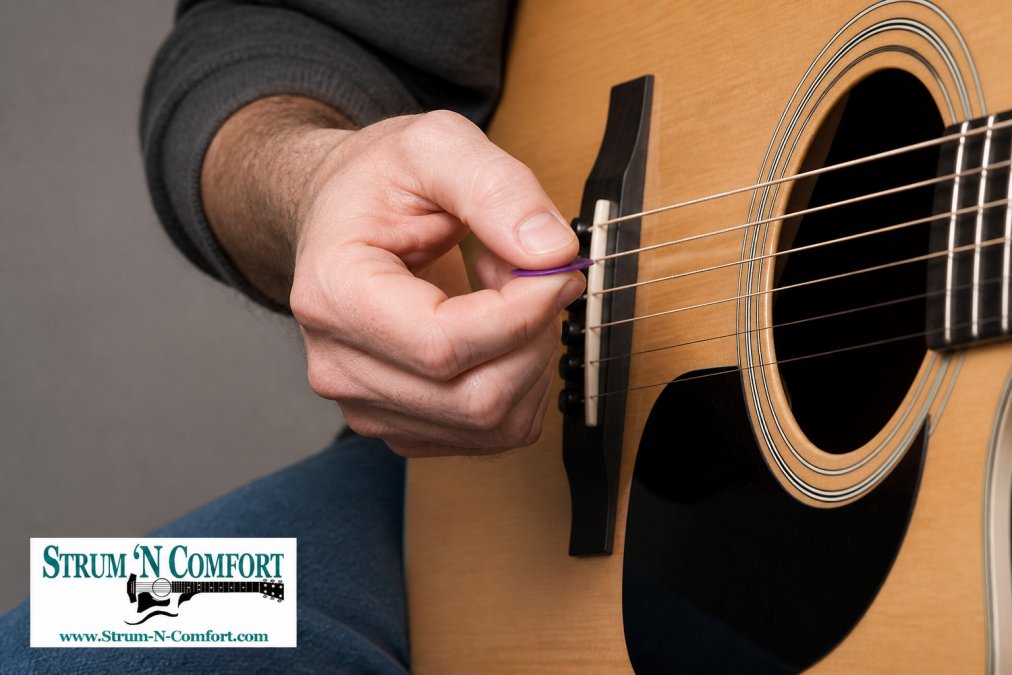
Experiment with pick angle. A steeper angle produces sharper articulation and requires less pick depth for speed. A shallower angle generates a warmer tone. For transitional playing, a moderate 45-degree angle offers versatility, letting you adapt quickly whether executing rapid alternate picking or shifting into fingerstyle.
Keep your wrist relatively straight, not bent backward or forward. This neutral position allows forearm movement to drive picking motion. When you transition to fingerstyle, this alignment helps your fingers move independently while your wrist remains stable.
Hybrid Picking Techniques for Seamless Style Switching
Hybrid picking bridges flatpicking and fingerstyle by combining pick-driven notes with simultaneous finger plucking. Your pick handles primary melodic lines while your free fingers pluck accompanying strings. This technique is common in country, rock, and contemporary acoustic music, offering pick speed and articulation alongside harmonic richness.
The transition from flatpicking to hybrid picking happens gradually. Start by playing a simple alternate picking pattern on a single string. Once automatic, add a simultaneous finger pluck on an adjacent string. Your middle or ring finger plucks while your pick strikes a different string. This requires thumb-index coordination alongside independent finger movement.
Common mistake: attempting hybrid picking before your flatpicking foundation is solid. If your alternate picking requires conscious effort, adding finger independence will overwhelm your coordination. Master pure flatpicking mechanics first, then layer in finger plucking.
Practical drill: play a steady downstroke-upstroke pattern on the high E string while your middle finger plucks the B string simultaneously. Practice slowly until pick and finger move in perfect synchronization. Gradually increase tempo, then add your ring finger plucking the G string. You're now managing three independent motions: pick motion, middle finger plucking, and ring finger plucking.
Hybrid picking teaches your right hand that it doesn't need to choose between pick and fingers, it can use both. This realization is foundational for smooth transitions, developing the neural pathways to switch between techniques because you've already trained it to execute both simultaneously.
Watch this video from guitar virtuoso Justin Johnson for “Hybrid Thumb Picking - What, When and Why”
Crossover Thumb Picks: Building Your Universal Picking Technique
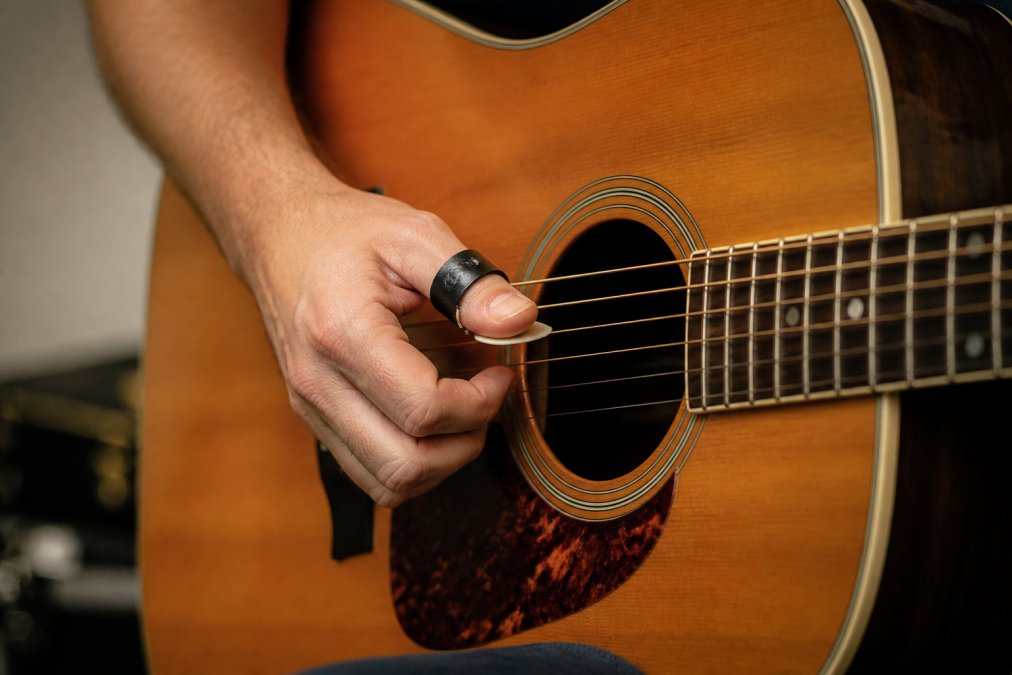
A Crossover thumb pick sits on your thumb while leaving your fingers completely free for independent plucking. Unlike conventional thumb picks that restrict finger movement, Custom Crossover thumb picks maintain constant readiness for both flatpicking and fingerstyle approaches. Your thumb provides pick-driven power and articulation, while your fingers remain available for immediate fingerstyle passages.
The design philosophy centers on comfort, flexibility, and what we call Universal Picking Technique, the ability to seamlessly combine right-hand techniques without repositioning or switching tools. When you wear a Crossover thumb pick, your hand position remains consistent whether executing rapid alternate picking or transitioning into fingerstyle plucking. There's no pause, no tool swap, no moment of vulnerability in live performance.
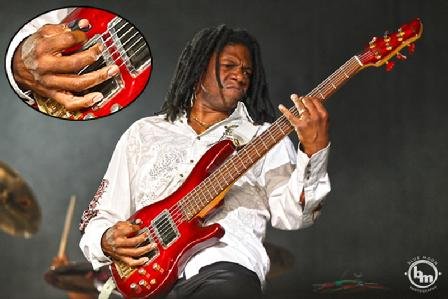
The practical advantage becomes obvious during hybrid picking passages. Your thumb drives the pick motion while your fingers pluck independently. The real benefit emerges during transitions: when a song shifts from flatpicking to fingerstyle, your hand doesn't need to change position or remove equipment. Your thumb continues its motion while your fingers take the lead, or vice versa. This seamless transition maintains timing and reduces cognitive load during performance.
Developing Universal Picking Technique with a Crossover thumb pick requires the same foundational work as traditional methods but accelerates your progress. Because the tool supports both techniques simultaneously, you can practice transitions immediately rather than treating them as an advanced skill. Your muscle memory develops around the unified hand position that works for both approaches.
The comfort and flexibility of Crossover thumb picks directly impact your ability to practice transitions effectively. They're engineered for extended sessions, allowing you to build dexterity and muscle memory without the physical strain that interrupts traditional practice routines. The highly effective design means you can focus on developing your technique rather than adapting to uncomfortable equipment.
Guitar Hand Muscle Fatigue Prevention During Style Transitions
Transitioning between fingerstyle and flatpicking creates unique fatigue patterns because different muscle groups activate depending on which technique dominates. Your forearm flexors work heavily during flatpicking's rapid motion. Your finger extensors and intrinsic hand muscles engage intensely during fingerstyle plucking. When you alternate between techniques, you're switching which muscles bear the load.
This switching pattern can increase fatigue compared to playing one style exclusively. The solution isn't to avoid transitions but to develop balanced strength across all involved muscles.
Ergonomics matter profoundly. Your wrist angle, forearm position, and shoulder alignment determine how efficiently your hand performs transitions. Maintain a neutral wrist position, imagine a straight line from your forearm through your hand to your fingertips. This alignment distributes effort across larger muscle groups that sustain longer practice sessions.
Your pick grip contributes significantly to fatigue. A grip that's too tight forces your forearm muscles to work harder. A grip that's too loose requires constant micro-adjustments that accumulate fatigue. The moderate grip pressure discussed earlier minimizes unnecessary muscular effort.
Tool design influences fatigue directly. A pick or thumb pick that doesn't fit your hand naturally forces adaptation, creating strain patterns. Well-fitted tools allow your hand to maintain proper position without constant adjustment, extending your practice capacity significantly.
Prevention strategies include strategic breaks and targeted stretching. Play for 20-30 minutes, then rest for 5 minutes. During rest periods, gently stretch your forearm flexors and extensors. This prevents tension accumulation that leads to fatigue and potential injury.
Step-by-Step Drills for Transitioning Mid-Song
Effective transition drills isolate specific coordination challenges and build the muscle memory needed for seamless style switching.
Buy Now at our secure ETSY SHOP music store →
Drill 1: The Rhythm-to-Fingerstyle Switch (5-10 minutes)
Play a simple four-chord progression using basic flatpicking for eight measures. Then transition to fingerstyle on the same progression. Your goal is to maintain harmonic structure while shifting technique. Practice this transition at a tempo where flatpicking feels automatic. Play the flatpicking section four times through, then transition to fingerstyle for four measures. Repeat this cycle five times. The repetition builds neural pathways that recognize when to switch and execute the change without conscious effort.
Drill 2: The Hybrid Picking Progression (10-15 minutes)
Play a single chord and establish a steady alternate picking pattern on the high strings. Once automatic, add a simultaneous finger pluck on a lower string. Your pick strikes the high E while your middle finger plucks the B string. Maintain this hybrid pattern for 16 measures.
Then transition: drop the pick motion and continue only with fingerstyle for eight measures. Return to hybrid picking for eight measures. This teaches your hand that it can access both techniques from the same position without repositioning or switching tools.
Drill 3: The Pick-Tuck Speed Drill - The Flat Pick Magician (8-12 minutes)
This develops "pick-tucking", quickly transitioning a flatpick into a position where it doesn't interfere with fingerstyle playing. Hold your pick in normal flatpicking position and play a rapid alternate picking pattern for four measures. At the end, quickly tuck your pick away and immediately transition to fingerstyle plucking for four measures. Repeat this cycle, gradually increasing tempo.
The goal is reaching a tempo where the tuck-and-transition happens so quickly that the song's rhythm never falters.
Drill 4: The Genre Transition (15-20 minutes)
Select two contrasting songs that demand different techniques. Play through the first using pure flatpicking. When you reach the end, immediately begin a fingerstyle piece. The transition between songs mirrors mid-song transitions you'll execute in performance, building confidence that you can switch techniques reliably under realistic conditions.
These drills work best when practiced daily for 20-30 minutes, integrated into your regular practice routine. Build transition work into your foundational practice from the beginning.
Developing Dexterity and Muscle Memory for Consistent Transitions
Dexterity and muscle memory are developed through specific, intentional practice. The transition between fingerstyle and flatpicking requires both because your hand must execute different motions reliably without conscious thought.
Muscle memory develops when your nervous system learns a movement pattern so thoroughly that it becomes automatic. This happens through repetition, consistency, and progressive challenge. When you practice a transition 50 times at a comfortable tempo, your brain builds a neural pathway for that movement. When you practice it 500 times across varying tempos and musical contexts, that pathway becomes strong and reliable.
Start with slow tempos where you can execute transitions cleanly. Speed and musical application come later. Many guitarists rush this progression, attempting to transition at performance tempo before their muscle memory is established. This creates inconsistent execution and frustration.
Dexterity develops through exercises that isolate finger independence. A foundational fingerstyle exercise: play the open A chord and pluck each string individually using thumb, index, middle, and ring fingers in sequence. Repeat this pattern slowly and deliberately, focusing on consistent tone and timing. Once automatic at a slow tempo, gradually increase speed.
For flatpicking dexterity, alternate picking drills build coordination between your pick hand and fretting hand. Play a simple scale using strict alternate picking. Start at a tempo where you can execute cleanly, then gradually increase.
Dedicate 40% of your practice time to pure flatpicking development, 40% to fingerstyle technique, and 20% to hybrid picking and transitions. This allocation ensures balanced development across all skills you need.
Consistency matters more than duration. Practicing 30 minutes daily develops dexterity faster than practicing three hours once weekly. Your nervous system needs regular reinforcement to build reliable muscle memory.
Track your progress by recording yourself playing transition passages. Compare recordings from week one to week four. You'll hear improvements in timing consistency, tone quality, and the smoothness of technique switches.
Transitioning between fingerstyle and flatpicking represents one of the most practical skills you can develop as a guitarist. The ability to switch techniques seamlessly expands your musical vocabulary and opens access to styles and sounds that pure flatpicking or fingerstyle alone cannot achieve. Custom Crossover thumb picks are engineered specifically for this journey, offering the comfort, flexibility, and effectiveness needed to develop Universal Picking Technique. Start with the foundational drills, practice consistently, and watch your confidence grow. Your right hand is more capable than you realize, it just needs the right approach and the right tools to unlock that potential.
Frequently Asked Questions
Is it possible to transition between fingerstyle and flatpicking mid-song?
Yes, and it's one of the most valuable skills a guitarist can develop. Transitioning mid-song requires practice with hybrid picking techniques and muscle memory training. Start by practicing smooth hand position shifts during slower songs, then gradually increase tempo. Many professional musicians switch between styles seamlessly within a single performance. Using Crossover thumb picks makes these transitions significantly smoother because they allow your fingers to remain ready for fingerstyle while your thumb handles flatpicking duties without dropping your pick.
How do I reduce hand fatigue when switching between picking styles?
Hand fatigue occurs when your forearm and finger muscles work inefficiently during style transitions. Focus on relaxed hand positioning and avoid gripping the pick too tightly. Take short breaks between practice sessions, and incorporate stretching before and after playing. Ergonomic tools like Crossover thumb picks reduce fatigue by distributing the workload across your hand more evenly. David Oakes, former Musicians Institute instructor, noted that after just a few hours of play with the SharkTooth Crossover Pick, he experienced noticeably less muscle fatigue compared to conventional picks.
What makes Crossover thumb picks different from regular thumb picks for transitioning between styles?
Crossover thumb picks are specifically designed to enable what we call a Universal Picking Technique, allowing you to combine flatpicking and fingerstyle in one fluid motion. Unlike traditional thumb picks that can feel restrictive, Crossover thumb picks are comfortable and flexible, letting your fingers move freely while your thumb manages the pick. This design eliminates the awkward hand repositioning required when switching between a regular pick and bare fingers. Gil Parris, RCA/BMG recording artist, confirmed that Crossover thumb picks provide 'definitely an improvement over conventional thumb picks for easily moving between fingerstyle and flat pick techniques.'
How long does it take to develop smooth transitions between fingerstyle and flatpicking?
Most guitarists see noticeable improvement within 2-4 weeks of consistent daily practice using targeted drills. Building true muscle memory for seamless mid-song transitions typically takes 8-12 weeks of focused training. The timeline depends on your current skill level, practice frequency, and the complexity of the songs you're learning. Using the right tools—like Crossover thumb picks—accelerates this process by reducing hand strain and allowing you to practice longer without fatigue. Consistency matters more than duration; 20 minutes of focused drilling daily outperforms sporadic longer sessions.
This article was written using GrandRanker
Frequently Asked Questions
Q: Is it possible to transition between fingerstyle and flatpicking mid-song?
A: Yes, and it's one of the most valuable skills a guitarist can develop. Transitioning mid-song requires practice with hybrid picking techniques and muscle memory training. Start by practicing smooth hand position shifts during slower songs, then gradually increase tempo. Many professional musicians switch between styles seamlessly within a single performance. Using Crossover thumb picks makes these transitions significantly smoother because they allow your fingers to remain ready for fingerstyle while your thumb handles flatpicking duties without dropping your pick.
Q: How do I reduce hand fatigue when switching between picking styles?
A: Hand fatigue occurs when your forearm and finger muscles work inefficiently during style transitions. Focus on relaxed hand positioning and avoid gripping the pick too tightly. Take short breaks between practice sessions, and incorporate stretching before and after playing. Ergonomic tools like Crossover thumb picks reduce fatigue by distributing the workload across your hand more evenly. David Oakes, former Musicians Institute instructor, noted that after just a few hours of play with the SharkTooth Crossover Pick, he experienced noticeably less muscle fatigue compared to conventional picks.
Q: What makes Crossover thumb picks different from regular thumb picks for transitioning between styles?
A: Crossover thumb picks are specifically designed to enable what we call a Universal Picking Technique, allowing you to combine flatpicking and fingerstyle in one fluid motion. Unlike traditional thumb picks that can feel restrictive, Crossover thumb picks are comfortable and flexible, letting your fingers move freely while your thumb manages the pick. This design eliminates the awkward hand repositioning required when switching between a regular pick and bare fingers. Gil Parris, RCA/BMG recording artist, confirmed that Crossover thumb picks provide 'definitely an improvement over conventional thumb picks for easily moving between fingerstyle and flat pick techniques.'
Q: How long does it take to develop smooth transitions between fingerstyle and flatpicking?
A: Most guitarists see noticeable improvement within 2-4 weeks of consistent daily practice using targeted drills. Building true muscle memory for seamless mid-song transitions typically takes 8-12 weeks of focused training. The timeline depends on your current skill level, practice frequency, and the complexity of the songs you're learning. Using the right tools—like Crossover thumb picks—accelerates this process by reducing hand strain and allowing you to practice longer without fatigue. Consistency matters more than duration; 20 minutes of focused drilling daily outperforms sporadic longer sessions.